When I first started working in vacuum casting services over a decade ago, I’ll admit I didn’t fully grasp how flexible vacuum-cast materials could be. I knew the basics: silicone molds, liquid resin, low-pressure casting, rapid turnaround for prototypes. But it wasn’t until a client from the medical device industry brought in a project that stretched our capabilities that I realized this process is about far more than just copying a part – it’s about adapting to what that part needs to do. That’s when I learned: the flexibility of vacuum-cast materials isn’t just a technical detail; it’s the reason so many industries rely on us to turn ideas into functional, durable, and custom solutions. Vacuum Casting Services
Let’s start with the foundation. Vacuum casting works by using a master model (usually 3D-printed or machined) to create a silicone mold, then injecting thermoset resin into that mold under vacuum to eliminate air bubbles. The magic here lies in the resins themselves – we don’t just use one type. Over the years, we’ve built a library of materials that can mimic everything from rigid engineering plastics to soft, flexible elastomers, and even some with specialty properties like heat resistance or biocompatibility. This is where the flexibility really begins: the ability to match the material to the application, rather than forcing the application to fit a limited set of materials.
Take our medical clients, for example. A few years back, a team developing a portable wound dressing applicator came to us with a problem. They needed two parts: a rigid handle that could withstand repeated use and sterilization, and a soft, malleable tip that needed to conform to different body parts without irritating skin. Traditional manufacturing methods would have required two separate parts, joined together, adding time and cost. But with vacuum casting, we could use a rigid medical-grade resin for the handle and a soft, Shore A 30 silicone-based resin for the tip – all cast into a single mold in one process. No assembly, no gaps, no risk of the two parts separating during use. That’s flexibility that solves real-world problems.
Another area where this shines is in the automotive industry. We work with several prototyping teams who need parts that simulate production materials like ABS, polypropylene, or even high-temperature nylons for testing fit, form, and function. But sometimes, a prototype needs to be more flexible than the final production part. A client testing a new car door seal, for instance, needed a prototype that could be stretched, twisted, and exposed to extreme temperatures to see how it would hold up. We used a flexible polyurethane resin that can stretch up to 300% of its original length, replicate the exact texture of the production seal, and be cast in small batches for testing. The flexibility here isn’t just about the material’s physical properties – it’s about being able to iterate quickly, adjust the material as testing reveals new needs, without the high costs of tooling for injection molding.
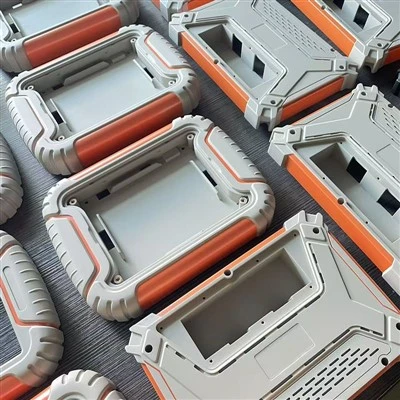
I’ve also seen vacuum-cast materials used in consumer electronics, where design is everything. A startup developing a wearable fitness tracker wanted a prototype case that felt like rubber (so it was comfortable to wear) but had the structural rigidity to hold the circuit board and screen. We used a dual-hardness resin: a soft outer layer for comfort and a rigid inner frame for support, all vacuum cast. The result was a part that looked and felt like the final product, but could be modified quickly as the team adjusted the design. When they decided to make the case slightly thinner, we just adjusted the mold and cast another run in a few days – no waiting for new tooling, no expensive changes to a production line. That’s the kind of flexibility that gives startups the agility they need to bring products to market fast.
But it’s not just about different hardness levels. The flexibility of vacuum-cast materials also extends to their ability to handle specialty requirements. For aerospace clients, we’ve cast parts with resins that can withstand temperatures up to 200°C, without warping or losing structural integrity. For robotics teams, we use resins with high impact resistance, perfect for parts that get bumped or dropped during testing. Even for artists and designers, who often come to us with unique projects, we can cast transparent resins for acrylic-like parts, color-matched resins to exact specifications, and even materials that can mimic the look and feel of wood or metal. One memorable project was a custom sculpture made with a combination of rigid and semi-transparent flexible resins, which would have been impossible to create with traditional methods without post-processing that would have altered the design.
Of course, this flexibility doesn’t come without considerations. Every material has its limits, and part of our job as a vacuum casting service is to guide clients to the right material for their needs. For example, if a part needs to be used in a high-stress application that requires constant flexing, we’ll recommend a flexible elastomeric resin rather than a rigid one. If biocompatibility is a must, we’ll stick to FDA-approved resins that meet those standards. It’s not about just offering every material we have – it’s about understanding the application, the environment the part will be in, and the performance required, then matching that to a vacuum-cast material that can deliver.
I’ve had clients come to us thinking vacuum casting is only for low-detail prototypes, but that’s changed over the years. Today, vacuum-cast materials can produce parts with fine details, smooth finishes, and tight tolerances – all while being flexible in material choice. A recent project for a client in the aerospace industry required a small, complex bracket that needed to be both rigid enough to support components and light enough for aircraft use. We used a lightweight engineering resin that replicated the exact specifications of the production aluminum bracket, but because it was vacuum cast, we could adjust the design slightly to reduce weight even more during prototyping. The client was able to test several iterations quickly, all using the same process, and landed on a design that’s now moving to production. That’s the kind of flexibility that makes vacuum casting a go-to for both prototyping and low-volume production runs.
Another point that often surprises clients is the consistency of vacuum-cast materials. Because the process is done under vacuum, air bubbles are eliminated, which means each part is uniform in its properties. A flexible resin cast one week will be exactly the same as one cast three months later, which is critical for applications where performance can’t vary. For example, a medical device that uses a flexible seal needs every seal to feel and perform the same, regardless of when it was cast. Our process ensures that consistency, so clients can rely on the flexibility of the material without worrying about part-to-part variation.
I think what I’ve learned over the years is that the flexibility of vacuum-cast materials is two-fold: there’s the material’s ability to adapt to different physical requirements, and there’s the process’s ability to adapt to the client’s needs. As a vacuum casting service, we don’t just provide a service – we provide a solution that can change as a project evolves. A client might start with a rigid prototype, then decide they need a flexible part for testing, then switch to a heat-resistant material for a production run. We can adjust, because our library of materials and our process are built around that flexibility.
If you’re working on a project where you need a part that’s not quite right for traditional manufacturing – whether it’s a medical device, automotive component, consumer product, art piece, or something in between – the flexibility of vacuum-cast materials might be exactly what you need. Instead of being limited to a small set of materials or dealing with the high costs of custom tooling, you can work with a process that lets you adapt, test, and refine until you get the part that’s perfect for your needs.
We’re here to help you explore that flexibility. Whether you have a clear idea of what material you need, or you’re not sure which material will work best for your application, we can guide you through the process, from master model to final part. Don’t let your project be limited by the materials available to you – reach out to us to discuss your needs and see how vacuum-cast materials can bring your vision to life.
CNC Milling Services References
- Rosato, D. V., & Rosato, M. G. (2004). Injection Molding Handbook. Kluwer Academic Publishers.
- ASTM International. (2018). Standard Test Methods for Rubber Property—Durometer Hardness (Standard D2240).
- Engineering Materials and Processes. (2020). Vacuum Casting for Rapid Prototyping and Low-Volume Production. Elsevier.
- Food and Drug Administration. (2021). Class VI Plastic Materials for Medical Devices.
- Aerospace Materials Handbook. (2019). Thermoset Resins for Aircraft Components. National Aeronautics and Space Administration.
Shenzhen Multi-Wins Precision Technology Co., Ltd.
As one of the most professional vacuum casting manufacturers and suppliers in China, we have world-leading production equipment and strong manufacturing capabilities. Please feel free to buy customized vacuum casting made in China here from our factory. Also, quotation is available.
Address: 1 Phase, Yi’an City Central Garden, Longfei Avenue, Longgang District, Shenzhen, GD, China. 518100
E-mail: info@multi-wins.com
WebSite: https://www.multi-wins.com/
