Hey there, machining crew, VMC operators, and shop owners who’ve ever stared at a maintenance invoice and wondered, “Wait, is this normal?” I’m [your supplier alias] – I’ve been selling vertical machining centers (VMCs) for over a decade, and let’s be real, one of the most common questions I get isn’t “How fast does this cut aluminum?” It’s “What’s this thing gonna cost me to keep running?” No vague “it depends” garbage, let’s break this down like we’re geeking out over a new vise chuck. Vertical Machining Center
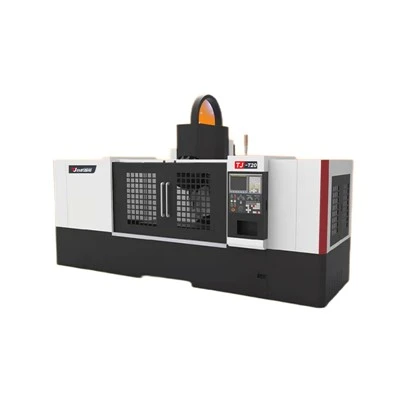
First off, let’s get one thing straight: VMC maintenance costs aren’t just random numbers they pull out of a parts bin. They tie straight to how you use the machine, what brand/model you’re rocking, and whether you’re doing basic upkeep or letting issues spiral. After all, the cheapest VMC on paper could drain your wallet faster if you skip small fixes that turn into big repairs. I’ve seen that – had a customer who skipped a $50 spindle bearing check, ended up with a $12,000 spindle replacement a few months later. Ouch.
Let’s start with the big, predictable line items. These are costs you can plan for, not surprise bills that make you pull your hair out. First up, routine preventive maintenance (PM) – this is non-negotiable, not something you skip to save cash. Most shops split PM into quarterly and annual checks. Quarterly PM usually runs $200-$500, depending on your VMC size. Why the range? Smaller 3-axis VMCs for prototyping only need a lube top-off, filter change, and a quick spindle temperature check. Bigger 5-axis units or machines running 24/7? You’re looking at extra linear rail inspections and ball screw lubrication, hence the higher cost. Annual PM jumps to $800-$1,800 – that’s when you swap out more worn parts, calibrate accuracy, and test emergency stops. Again, 5-axis or high-production machines lean toward the higher end here, and if you sign up for a regular service package with us, we knock 10-15% off these rates – that’s a little perk for repeat customers.
Next, consumables. These are the tiny, replaceable parts you go through regularly, and they add up quicker than you think. Let’s list the usual suspects: spindle oil, hydraulic fluid, air filters, coolant filters, way lube, and those little stuff like O-rings. Most shops spend $1,200-$3,000 a year on these – again, depends on usage. If your VMC is sitting idle 40 hours a week? You’ll be on the lower end. If it’s running three shifts a day, five days a week churning out production parts? You’ll burn through filters and oil faster, so budget for the top of that range. Pro tip: using high-quality OEM or approved aftermarket fluids isn’t just snobbery – cheap fluid leads to more friction, more wear, and more repairs long-term. I always tell customers to skip the “$10 a bucket” lube; that’s false economy.
Now, the repair costs – the fun ones no one budgets for, but let’s be honest, they’re part of owning any machine. These are the irregular fixes that pop up when something wears out or breaks. Let’s break down common (and expensive) repairs. Spindle issues are the big one – if your spindle goes, that’s a chunk of change. A standard 10,000 RPM spindle for a 3-axis VMC runs $3,000-$7,000 for parts, plus $1,000-$2,000 in labor. If you’ve got a high-torque 15,000 RPM spindle for aluminum machining? $8,000-$15,000, easy. Way less common but way pricier: 5-axis rotary tables. A single rotary axis repair can hit $5,000-$12,000, depending on the parts needed. Even the “small” repairs add up – a broken linear scale might be $800, a bad tool changer arm $1,500, and don’t get me started on coolant system clogs that lead to pump replacements ($500-$1,000). These irregular repairs usually run $2,000-$10,000 a year, but if you’re running your VMC hard, that number can go way higher – I’ve seen a shop with a 24/7 5-axis VMC spend $18k on repairs in a year, all from skipped basic PM.
Wait, can you cut these costs? Hell yeah, and that’s what I live for – helping customers save cash without breaking their machine. First, stick to that PM schedule I mentioned earlier. It’s like changing your car’s oil every 5k miles – skip it, and your engine dies. We offer free digital PM checklists for every VMC we sell, so you can track when parts need swapping, no guesswork. Second, train your operators. Most VMC problems aren’t from the machine itself – they’re from operators who forget to clean chips off the linear rails, or run tools that don’t fit right, or ignore unusual noises. I’ve had customers cut repair costs by 30% just by running a 2-hour operator training session on basic maintenance. Third, use the right parts and fluids. I know generic parts are cheaper, but a counterfeit spindle bearing will fail in half the time, and that ends up costing you more. We sell genuine OEM parts at fair prices, no markup garbage, so you don’t have to hunt around. Fourth, if your VMC is older, consider retrofitting instead of replacing. A lot of 10-year-old VMCs can get new linear scales, updated controls, and even a spindle upgrade for half the cost of a new machine, and that cuts down on long-term repair costs too.
Now, let’s get real with a concrete example to make this less abstract. Take a mid-sized 3-axis VMC, running two shifts a day (80 hours a week) making custom metal parts. Routine PM: quarterly ($400 x 4) = $1,600, annual ($1,200) = $1,200. Consumables: $2,200 a year. Irregular repairs (small stuff, one minor spindle checkup) = $3,500 a year. Total: ~$8,500 a year. Compare that to a high-end 5-axis VMC running three shifts: quarterly PM ($600 x4) = $2,400, annual ($1,600) = $1,600, consumables ($3,000), repairs ($7,000). Total: ~$14,000 a year. That’s a big gap, but it makes sense – more moving parts, harder use, higher precision standards.
Wait, what do I see when customers come to me worried about maintenance costs? A lot of them think “lower upfront price = lower total cost,” but that’s rarely true. I had a customer buy a no-name VMC from a random seller for $10k less than our units. Six months later, his spindle failed, and the seller vanished – he had to pay $9k for a new spindle, plus $2k in labor, and our service team had to fix the poor installation that caused the failure. By that point, he’d already spent $15k on repairs, more than the initial difference. So do your homework on the brand and support, not just the sticker price.
And let’s not forget about service plans. Most VMC suppliers (including us) offer annual service contracts that cover parts, labor, and emergency calls. For a mid-sized 3-axis VMC, that’s usually $2,500-$3,500 a year – it locks in costs, and if something breaks, you don’t get hit with a surprise bill at 8 PM on a Friday when you have an order due. It’s peace of mind, plain and simple. I always tell new customers: if you can afford the machine, you can afford a service plan, and it’s way better than the alternative.
Look, owning a VMC isn’t just about the buy-in. It’s about planning for the maintenance that keeps it running for 10, 15, even 20 years. The worst thing you can do is ignore small issues because you think they’re too expensive to fix now. That’s how you go from a $500 fix to a $10,000 headache. At the end of the day, maintenance costs are an investment – if you take care of your VMC, it’ll take care of you, pumping out perfect parts for years.

If you’re shopping for a new VMC, or you’ve got an old one and want to get a clear handle on its maintenance costs, hit us up. We don’t do sales fluff – we’ll walk you through exactly what to budget, no hidden fees, no vague answers. Whether you’re a one-man shop or a large production facility, we’ve got solutions that fit your needs. Let’s chat, no pressure, just straight talk about keeping your machine running smoothly.
Five Axis Machining Center References:
- Society of Manufacturing Engineers. (2022). VMC Preventive Maintenance Best Practices. SME Press.
- Modern Machine Shop. (2023). The Real Cost of CNC Machine Maintenance. Gardner Business Media.
- Haas Automation Inc. (2021). Vertical Machining Center Maintenance Guide. Haas Technical Publications.
Guangdong Taiji Intelligent Equipment Co., Ltd.
With abundant experience, we are one of the most professional vertical machining center manufacturers and suppliers in China. Please feel free to buy cheap vertical machining center for sale here from our factory. For price consultation, contact us.
Address: Room 107, Building 15, No. 911 Jian’an Road, Chang’an Town, Dongguan City, Guangdong Province
E-mail: sale@gdtaijicnc.com
WebSite: https://www.gdtaijicnc.com/
