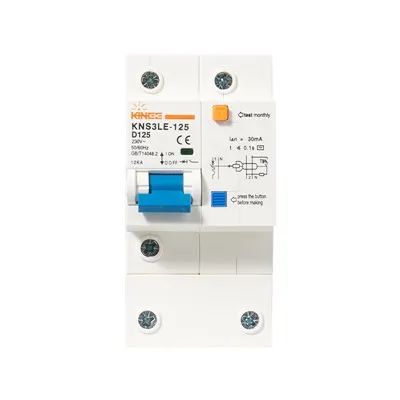
If you’re in the electrical game, you’ve probably heard the term “RCBO” thrown around a lot—but let’s cut the jargon for a sec. RCBO is that little device sitting in your consumer unit (or load center, if you’re American) that combines two things: an RCD (Residual Current Device) that cuts power when there’s a tiny leak to earth, and an MCB (Miniature Circuit Breaker) that stops overloads or short circuits. But here’s the part most people glaze over that actually makes it work right: its sensitivity. RCBO
When I started supplying these things, I’ll admit I didn’t fully grasp how much a 10mA vs 30mA sensitivity difference changes everything. I used to just box up whatever came through the warehouse, no questions—until a local electrician popped into my shop one rainy Tuesday and dropped a truth bomb. “You can’t just sell any RCBO,” he said, handing me a burned-out extension cable with a frayed core. “This 10mA one I installed last week would’ve caught that tiny leak before it started a fire, but the 30mA we normally use? It didn’t trip fast enough.” That’s when it hit me: sensitivity isn’t just a number on a spec sheet—it’s the whole reason the device exists.
Let’s break it down in plain terms. Sensitivity is how much residual current (that’s the juice that escapes from a circuit instead of going back through the neutral wire) it takes to make the RCBO flip the switch and cut power. The lower the mA number, the more sensitive the device. That guy’s example wasn’t a fluke. Think about scenarios where even a tiny leak is a death sentence: bathrooms, outdoor sockets, kids’ play areas, anywhere water is around electricity. Water makes current flow way easier, so a frayed cable in a bathroom wall could leak 30mA or more without you even noticing—until someone touches a tap and gets a shock that could stop their heart. A 10mA sensitive RCBO? It trips in like 0.04 seconds, way before that current can cause harm. I’ve seen the photos from jobs where a 10mA RCBO caught a kid’s toy that fell in a pool—no injury, just a trip. The 30mA ones? They might not catch that small leak at all, leaving people exposed.
Then there’s the stuff people forget about: nuisance tripping. Wait, hold on—if a device is super sensitive, why would that be a problem? Let’s say you’re a homeowner with a 10mA RCBO on your kitchen sockets. Your blender, your microwave, your coffee maker—they all have tiny normal leaks, right? A few mA here, a couple there. The 10mA one will trip if the total adds up to 10mA, even if there’s no actual fault. I had a customer last month who was convinced his RCBO was broken because it kept cutting out when he ran his toaster and espresso machine at the same time. Turns out, he’d bought a 10mA model for his kitchen when he should’ve used a 30mA there. 10mA is for high-risk spots where a shock is a lethal risk, 30mA is for general use to avoid shutting down the whole house every time you toast bread. That’s why as a supplier, we don’t just sell one size—we match sensitivity to the job, because get that wrong and you end up with either a fire hazard or a house that won’t let you make toast.
Let’s talk commercial and industrial jobs too, because sensitivity matters there just as much. Factory floors have heavy machinery, long cable runs, tools that are used every day. A 30mA RCBO might trip if a machine’s insulation is a bit worn, or if a long cable has a normal small leak. But what if you go too low? Wait, no—industrial jobs often use 100mA or even 300mA for main circuits, right? Because nuisance tripping would shut down a whole production line, costing thousands an hour. If you put a 10mA RCBO on a factory’s main feed, every small leak from the conveyor belts would trip it nonstop, costing the client way more in downtime than a tiny leak that never turns into a fire. That’s where our team steps in—we don’t just send a generic RCBO, we help clients pick the right sensitivity based on their space, their gear, and how they use it. I’ve had plant managers come to us after wasting money on the wrong units, and when we get the sensitivity right, they tell us their downtime drops by 70%. That’s the stuff that makes my job worth it.
Here’s another point no one talks about: regulations. Most places don’t just suggest sensitivity levels—they enforce them. In the UK, for example, wiring regs say any circuit in a bathroom, shower room, or outside has to use a 30mA RCBO minimum, and 10mA for zones where someone is very close to water (like inside a shower tray). In some industrial sites, OSHA in the US requires specific sensitivity for heavy equipment to prevent shocks to workers. I’ve had clients try to cut corners and buy cheaper, less sensitive RCBOs to save a buck, and those jobs end up failing inspection. Not only does that mean they have to rip out the wrong units and start over, but they might get fined too. As a supplier, we make sure all our RCBOs meet the latest standards, and we tell clients exactly why a certain sensitivity is required, not just what number to use. A few years back, a building contractor tried to tell me he didn’t need 10mA for a school’s playground sockets—said 30mA was enough. I pulled up the regs, showed him the stats on playground shocks, and he ended up ordering 20 of the 10mA units. Later he texted me to say a student’s broken cable had leaked 12mA, and the RCBO tripped before anyone got hurt. That’s the impact sensitivity has.
Wait, let’s bust a common myth: more sensitive isn’t always better. I can’t stress that enough. I’ve heard people say “the most sensitive RCBO is the best,” but that’s like saying a fire alarm that trips every time you boil a kettle is a good thing. It’s not—it’s a nuisance, and people start disabling it, which is way more dangerous than the small risk of a non-lethal shock. So the sweet spot depends entirely on the application. Let’s make a quick cheat sheet for anyone reading: 10mA = high-risk areas (bathrooms, pools, playgrounds, medical equipment) where even a tiny shock can be fatal. 30mA = general use (kitchens, living rooms, outdoor sockets) where you need protection without constant trips. 100mA+ = industrial, main power feeds, or areas where nuisance tripping would cause big problems. As a supplier, we keep all these in stock, and we’re always on hand to answer questions about which one fits your project.
I’ve been doing this for 12 years now, and the number one mistake I see people make is ignoring sensitivity. They see an RCBO, pay the lowest price, and don’t check what its tripping current is. Last year, a homeowner had a fire in his attic because the RCBO he installed was a 300mA model—so a small leak from a frayed cable didn’t trip it until the insulation melted and caught the wood. That’s a tragedy, and it all came down to choosing the wrong sensitivity. When we supply an RCBO, we test every batch to make sure it trips at exactly the right mA, not just close. A lot of cheaper brands cut corners here, selling units that only trip at 40mA when they’re supposed to be 30—way too slow to stop a shock. Our team doesn’t do that. We know that sensitivity is the line between safety and disaster.
So if you’re an electrician, a contractor, or a homeowner working on a project, don’t sleep on sensitivity. It’s not just a spec to tick on a form—it’s the part that will protect your family, your workers, your property. If you’re not sure which sensitivity you need, hit us up to chat through your project. We can help you pick the right RCBO, make sure it meets all the regulations, and save you from costly mistakes down the line.
Wait, let’s wrap this up before I ramble too much. The takeaway? Sensitivity of an RCBO isn’t just a technical detail—it’s the core of what makes the device a life-saver. Too high (not sensitive enough) and you risk shocks and fires. Too low (overly sensitive) and you get nuisance trips that make people disable it. The right sensitivity? That’s where safety meets practicality, and that’s the stuff we specialize in. If you’re ready to get the right RCBO for your job, reach out to us to discuss your requirements. We’re here to make sure you get the exact product you need, no guesswork.
RCBO References
- IET Wiring Regulations (BS 7671:2018+A2:2022)
- OSHA Electrical Safety Standards (29 CFR 1910 Subpart K)
- Electrical Safety Foundation International (ESFI) "Residual Current Device Safety Guidelines"
- International Electrotechnical Commission (IEC) 61008-1:2020
Wenzhou Kinee Electrical Co., Ltd.
We are one of the most professional rcbo manufacturers and suppliers in China, featured by quality products and good price. Please rest assured to buy advanced rcbo made in China here from our factory. We also accept customized orders.
Address: Unit 1, Building 31, Wenzhou Wenbo Science and Technology Industrial Park, No. 706 Yanyun Road, Lingkun Street, Oujiangkou Industrial Cluster Area, Wenzhou, Zhejiang Province
E-mail: sandyma@kinee.net
WebSite: https://www.kinee.net/
