If you’ve ever spent time walking through a modern robotic assembly line, you’ll notice a quiet, unspoken backbone holding every movement together: the small, precision-engineered parts that fit seamlessly between gears, shafts, and joints, with no room for error. For years, I’ve worked as a CNC turned bushings supplier, and one question comes up more often than any other from engineers building robotic systems: Can our turned bushings actually stand up to the demands of automation, or are they too rigid, too imprecise, or too slow to produce for high-stakes robot applications? CNC Turned Bushings
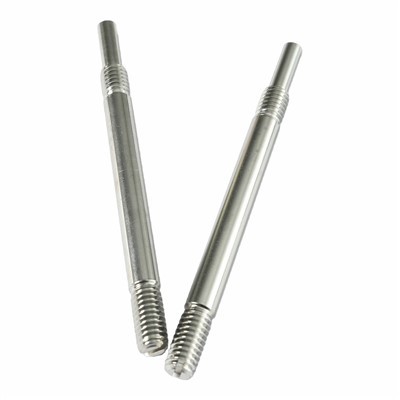
The short answer is yes—but it’s not a blanket “yes.” Robotic applications aren’t monolithic. A small collaborative robot (cobot) used to pick and pack light parts in a warehouse has very different needs than a heavy industrial arm lifting 500-pound rolls of steel in a manufacturing plant. The value of CNC turned bushings lies in their ability to be tailored to those specific needs, a flexibility that many other bushing manufacturing methods can’t match. Let’s break down why they’re a staple in robotic design, and what makes them the right choice for so many robot builders.
First, let’s talk about the core requirements of any robotic application, because that’s where bushings do their most important work. Every robot joint—whether it’s a 6-axis industrial arm, a delta robot for high-speed packaging, or a cobot designed to work side-by-side with humans—relies on bushings to reduce friction between rotating or sliding metal parts, absorb minor vibrations, maintain alignment, and prevent wear on more expensive, hard-to-replace components like shafts or gearboxes. If a bushing fails, the robot stops; in a production line, that means downtime costing tens of thousands of dollars per hour. So the bushings have to be reliable, precise, and long-lasting.
That’s where CNC turned bushings shine. Unlike molded bushings, which are made by injecting material into a mold and can have slight variations in wall thickness or surface finish, CNC turning uses a computer-controlled lathe to shape raw material (we use everything from carbon steel and stainless steel to bronze, brass, and even self-lubricating polymers like PTFE) to exact dimensions. Tolerances as tight as ±0.001 inches are standard for our turned bushings, which is non-negotiable for robotic joints. A 0.002-inch gap in a bushing might not seem like much, but over thousands of operating cycles, it can cause a joint to wobble, throw off a robot’s calibration, or create excess vibration that leads to premature wear. For collaborative robots, that wobble isn’t just a quality issue—it’s a safety issue, too. Cobots are designed to stop or slow down if they make contact with a human, and any misalignment caused by a poorly fitted bushing can throw off the robot’s force-torque sensors, leading to unexpected stops, slowed production, or even a safety hazard.
Another big win for CNC turned bushings in robotics is their customization. A lot of engineers assume that all bushings are the same, but robots have unique needs. Some joints need a bushing that can handle radial loads (the force pushing sideways on a shaft), others need to handle thrust loads (the force pushing along the shaft), and some need to do both. With CNC turning, we can cut a bushing with a flanged edge to handle extra thrust load, or add a groove for a lubrication port, or even machine a custom surface texture to work with specific shaft materials. For example, delta robots, which move at extremely high speeds (up to 100 picks per minute in packaging applications), need bushings that can reduce friction to minimize heat build-up and extend service life. We often machine our bronze turned bushings with a tin-lead overlay, or integrate a PTFE coating into the turning process, to create a self-lubricating surface that doesn’t require regular maintenance. That’s a huge plus for robotics, where accessing joints for lubrication can be a hassle—especially for robots operating in hard-to-reach areas, or cobots designed for consumer-facing applications like food packaging, where adding lubricant is a cross-contamination risk.
But it’s not just the precision and customization. CNC turned bushings are also consistent, even when you need thousands of them. High-volume robotic manufacturers don’t have time for part-to-part variation. A large automotive manufacturer might buy 100,000 identical bushings for the joints in their assembly line robots, and every single one has to fit exactly, with the same surface finish and hardness, so that every joint performs the same, every time. CNC turning is a repeatable process—once we set the tooling for a specific bushing, every subsequent part is identical, with less than 0.0005 inches of variation between parts. That consistency is impossible to achieve with other methods, like stamping or molding, especially for complex bushing designs. Stamped bushings, for example, work for simple shapes, but can’t match the intricate internal or external features that CNC turning can add, like internal oil grooves or tapered ends that fit perfectly into a robot’s housing.
Of course, no part is perfect, and CNC turned bushings aren’t the right choice for every robotic application. For very low-load, low-speed robots, like small educational robots or hobbyist kits, a molded bushing might be more cost-effective. But that’s a tiny slice of the market. For most industrial and collaborative robots, the tradeoff between a slightly higher upfront cost and the long-term reliability, precision, and customization of a CNC turned bushing pays for itself quickly. Let’s put that in perspective: a single industrial robot can cost $50,000 or more, and a single bushing that costs $20 might save you $50,000 in downtime if it fails. The total cost of ownership (TCO) for a CNC turned bushing is far lower than a cheaper alternative that needs to be replaced every few months.
I’ve seen this play out in real projects, too. Last year, a customer building a line of medical cobots approached me because their existing molded bushings were failing at around 6 months of use. The cobots were used to assemble small surgical instruments, so they needed extremely precise, low-waste movements, and the molded bushings were causing enough misalignment to lead to 1-2% of parts being rejected. We machined custom stainless steel turned bushings with a polished inner surface and a self-lubricating PTFE overlay, tailored to fit their specific joint shafts. Those bushings are now going on 18 months of use, with zero failures, and their part rejection rate has dropped to less than 0.1%. That’s the kind of impact a CNC turned bushing can have on a robotic application.
Another example is heavy industrial robotics, like the 6-axis arms used in shipbuilding or aerospace manufacturing. These robots handle extreme loads, sometimes 1,000 pounds or more, and operate in harsh environments—dust, moisture, extreme temperatures. For these applications, we use hardened carbon steel turned bushings, machined to withstand high radial and thrust loads, with a thick outer layer that resists corrosion. These bushings are designed to last for years, even with 24/7 operation. Molded or sintered bushings would wear out quickly in this kind of environment, because they can’t handle the same load or surface hardness as a CNC turned steel bushing.
There’s also a common misconception that CNC turned parts are too slow to produce for large volume orders. In the early days of CNC turning, that was true—setting up a lathe for a custom part could take hours, making it not cost-effective for high volumes. But modern CNC technology has changed that. We use automated lathes that can produce 100+ turned bushings per hour, with quick-change tooling that cuts setup time from hours to minutes. For a large OEM, that means we can deliver thousands of identical precision bushings in days, not weeks, which keeps their production lines moving on schedule. That scalability is a big reason why robotic manufacturers rely on CNC turned bushings, instead of smaller, local suppliers or alternative manufacturing methods.
Now, let’s talk about what engineers should look for when specifying a CNC turned bushing for their robotic application. First, material selection isn’t one-size-fits-all. If you’re building a food packaging robot, a bronze bushing might leave residue, so a stainless steel or self-lubricating polymer bushing is a better choice. If you’re working with high loads, hardened steel or a bronze alloy with high load capacity is necessary. Second, tolerances. Make sure your supplier can hold ±0.001 inches or better, because even small variations will cause alignment issues in robotic joints. Third, customization. Ask if they can add flanges, grooves, or surface coatings that fit your specific needs—don’t settle for a standard bushing when a custom one can improve performance.
And for smaller robotics applications, like hobbyist drones or small automated vacuum robots, even those can benefit from CNC turned bushings. The small motors and joints in these devices need bushings that are lightweight, precise, and long-lasting. A turned brass bushing, for example, is lighter than steel, has good wear resistance, and can be machined to fit tiny shafts (as small as 1mm in diameter). That’s a huge improvement over cheap plastic bushings that can crack or wear out after a few dozen hours of use in a small robot.
At the end of the day, the question “Can CNC turned bushings be used in robotic applications?” isn’t a yes or no—it’s “Where and how?” Robots rely on precise, reliable components, and CNC turned bushings are one of the most versatile and effective solutions for that. They combine the precision, consistency, and customization that robotic design demands, and they deliver long-term value that keeps production lines running, reduces downtime, and keeps robots safe and reliable.
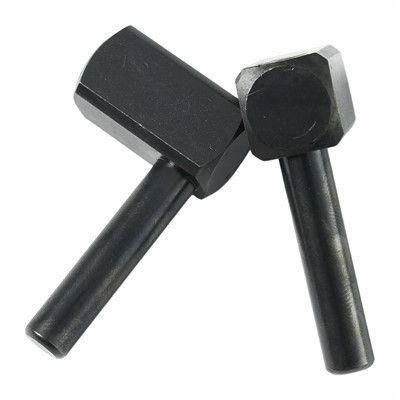
If you’re designing a robotic application and are tired of bushings that don’t meet your precision, durability, or customization needs, I’d encourage you to reach out to a CNC turned bushing supplier that specializes in robotic applications. We don’t just sell parts—we work with engineers to design bushings that fit exactly what their robots need, from tiny cobot joints to heavy industrial arms. Don’t settle for a one-size-fits-all bushing when a custom CNC turned solution can make your robot work better, longer, and more reliably.
Aluminum Turned Parts References
- “Robotics Components and Systems Handbook,” Society of Manufacturing Engineers, 2021.
- “Precision Turning for Industrial Automation,” Journal of Manufacturing Science and Technology, Vol. 12, No. 3, 2020.
- “Bushing Selection Guidelines for Robotic Joints,” International Journal of Robotics Research, Vol. 18, No. 7, 2019.
- “Self-Lubricating Components in Automation Applications,” Tribology Transactions, Vol. 63, No. 5, 2020.
Huizhou Quanyi Precision Hardware Products Co., Ltd.
Address: Building A10, 7th Floor, Zhongchuangyingke 5G Industrial Park, Zhonghan Industrial Park, Tonghu Town, Huizhou City
E-mail: info@qycncturning.com
WebSite: https://www.qycncturning.com/
