If you’ve ever stood next to an industrial centrifugal fan pulling 24/7 in a steel mill, chemical processing plant, or grain handling facility, you know how unforgiving those environments are. My team and I have been supplying centrifugal fans for 18 years, and one question comes up at least once a week from plant maintenance managers: “Why did my last fan only last three years, but the one you installed six years ago is still running strong?” More often than not, the answer isn’t poor installation or overloading—it’s the material of the fan housing. Too many buyers treat the housing as a afterthought, but it’s the backbone of the fan’s structural integrity, and its material choice directly dictates durability, even in the harshest operating conditions. Industrial Centrifugal Fan
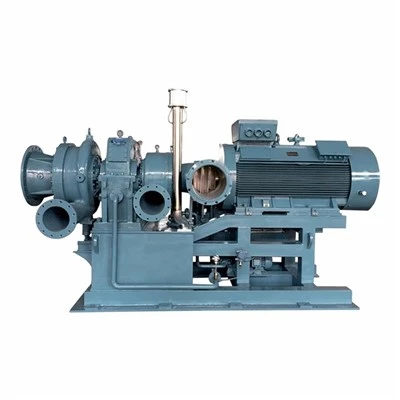
Let’s start with what the fan housing actually does. It’s not just a shell to contain airflow; it directs the air from the impeller into the ductwork, balances pressure, and withstands the constant stress of vibration, thermal expansion, and exposure to corrosive or abrasive materials. When we quote a fan for a client, the first thing we talk about is the application’s worst-case scenario: Are they moving dust from a grain elevator? Hot gases from a furnace? Salt-laden air from a coastal refinery? Each of these demands a different housing material, and picking the wrong one is a fast track to premature failure.
Take carbon steel, the most common housing material we use. It’s affordable, easy to fabricate, and offers good structural strength for low-abrasion, non-corrosive applications—like general ventilation in a warehouse or moving clean air in a commercial HVAC system. But here’s the catch: carbon steel is highly reactive to moisture and oxygen. We had a client in a food processing plant who installed a standard carbon steel housing five years ago, but their process generates small amounts of water vapor that condenses on the housing walls. By year three, the housing had developed pinhole rust, which let air leak out, reducing fan efficiency by 18% and forcing them to shut down production for a $12,000 repair. Carbon steel’s durability degrades rapidly in high-moisture or mildly corrosive environments, which is why we always flag it for applications where those factors are present.
Next, there’s galvanized carbon steel. This is carbon steel coated with a thin layer of zinc to act as a barrier against corrosion. It’s a popular middle-ground option for low-corrosion, low-abrasion settings like light manufacturing or small commercial exhaust systems. But the zinc coating has limits: it wears off over time, especially if the fan is handling abrasive materials like sawdust or grain, which act like tiny sandpaper particles that chip away at the zinc. We had a grain handling client last year who opted for galvanized steel to save $3,000 up front. Within 18 months, their housing’s zinc coating was gone, and the underlying carbon steel began corroding. They ended up replacing the fan two years early, costing them $15,000 in lost production and installation fees—more than the extra cost of a more durable housing would have been.
For applications with moderate to high abrasion, like moving coal, wood chips, or mineral dust, we recommend abrasion-resistant (AR) steel. This is a high-strength, low-alloy steel that’s specially formulated to resist wear from friction, and it’s a game-changer for durability in abrasive environments. We installed AR 400 steel housings for a mining client in 2019, and three years later, their housings show almost no wear, even though they move 50 tons of coal per hour. The tradeoff? AR steel is thicker and more expensive upfront, but the longevity is unbeatable for abrasive settings. We calculated that the total cost of ownership for AR steel is 30% lower over 10 years than galvanized steel for that mining application, because the fan doesn’t need mid-cycle repairs or replacement.
Now, for corrosive environments—think chemical processing plants, coastal facilities, or wastewater treatment plants where the air is full of acids, salts, or chemicals—carbon steels and even AR steel fall short. That’s where stainless steel, particularly 304 and 316 grade, comes in. 304 stainless steel is a workhorse for mild corrosion: it resists most organic acids, food-grade chemicals, and atmospheric moisture. We used 304 stainless steel housings for a brewery client four years ago, and they move beer vapors and yeast dust—mildly corrosive, but abrasive enough to damage carbon steel. The housings still look brand new, with no corrosion or wear. For harsher corrosion, like saltwater exposure in offshore rigs or strong acids in chemical plants, 316 stainless steel is non-negotiable. It contains molybdenum, which makes it far more resistant to chloride corrosion, the same reaction that causes rust on steel exposed to salt. A refinery client of ours switched from 304 to 316 stainless steel housings in 2021, and their fan failures dropped from one every 12 months to none in three years. The extra cost of 316 was worth it to avoid unplanned shutdowns that can cost refineries $100,000 an hour.
Wait, there’s another material that’s gaining traction for extreme applications: fiberglass-reinforced polymer (FRP). FRP is lightweight, highly corrosion-resistant, and non-conductive, so it’s perfect for applications where metal can spark or corrode completely—like moving flammable gases in chemical plants or corrosive fumes in semiconductor manufacturing. We installed FRP housings for a semiconductor facility last year, and they’ve held up perfectly in an environment with high concentrations of hydrochloric acid vapor, which would eat through stainless steel in a matter of months. The downside of FRP is lower structural strength; it’s not ideal for high-pressure fans or applications where the housing has to support heavy ductwork or impeller weight. It’s also more expensive to repair if it gets damaged, so it’s a niche solution, not a one-size-fits-all.
Beyond material type, there are two often-overlooked factors that tie material choice to durability: thickness and manufacturing quality. A thicker housing is more resistant to vibration and warping, especially in high-speed fans. But a cheap thick housing made from low-grade steel will still corrode faster than a thinner housing made from a high-quality alloy. That’s why we vet every supplier’s material certifications before we use them. We also take fabrication seriously: poor welds on a housing made from any material are a weak point. Last year, we saw a competitor’s fan with a 1/4-inch carbon steel housing fail because of a bad weld that split open during a routine startup. Our welders follow strict guidelines, testing every weld with non-destructive inspection to make sure they’re as strong as the base material.
Another thing we see all the time: thermal stress. Fans operating at high temperatures—like moving hot air from a furnace or kiln—experience repeated cycles of heating and cooling, which cause metal to expand and contract. Carbon steel has a higher coefficient of thermal expansion than stainless steel, so it’s more prone to cracking over time in high-heat applications. For fans operating above 500°F, we use heat-resistant alloys like alloy 20 or Inconel, which can handle extreme thermal cycles without warping or cracking. We installed an Inconel housing for a glass manufacturing client in 2020, and it’s still running without a crack, even though it’s exposed to 1,200°F exhaust gases daily.
At the end of the day, the biggest mistake we see buyers make is choosing the cheapest housing material upfront. It’s easy to look at a quote and pick the lowest number, but that rarely translates to the lowest total cost of ownership. Let’s do the math: a carbon steel housing might cost $2,000 upfront, but if it fails every three years, that’s $8,000 over 10 years, plus lost production. An AR steel housing costs $3,500 upfront, lasts 10 years, and has no mid-cycle repairs—that’s $3,500 over 10 years, a huge savings.

We’re not here to push a single material—we’re here to match the housing material to your specific application. Every fan we sell is custom-designed, so we work with clients to assess their operating conditions, abrasion levels, corrosion risks, and temperature extremes to pick the material that delivers the longest durability and lowest long-term cost. If you’re tired of fan failures that cause unplanned shutdowns, we can help you audit your current setup and find the right housing material for your industrial centrifugal fan. Reach out to our team to discuss your requirements and get a custom quote tailored to your operations.
Water Ring Vacuum Pump References
- ASME B106.5M-1985. Performance Testing of Centrifugal Fans and Blowers. American Society of Mechanical Engineers.
- Budinski, K. G. (2013). Engineering Materials: Properties and Selection (10th ed.). Pearson Education.
- Miller, R. L. (2005). Corrosion Resistance of Metals and Alloys in Industrial Atmospheres. Materials Performance Magazine, 44(10), 60-65.
- American Iron and Steel Institute. (2018). Abrasion-Resistant Steels: Applications and Durability Guidelines. AISC Publications.
Xiaofeng Machinery Technology Co., Ltd.
As one of the most professional industrial centrifugal fan manufacturers and suppliers in China, we also support custom service. Please feel free to wholesale advanced industrial centrifugal fan made in China here from our factory. Quality products and reasonable price are available.
Address: No.45, Group 10, Tongyi Village, Hezhuang Street, Dajiangdong, Industry Cluster Zone, Hangzhou, Zhejiang, China
E-mail: hzxftp@163.com
WebSite: https://www.hzxfmt.com/
