Hey everyone, as someone who’s been deep in the weeds as an optional embroidery device supplier for the past five years, I get it—when a small boutique or startup hears “optional embroidery,” their first thought is usually, “Wait, is this thing even worth using for making actual money?” Like, I’ve sat across from café owners who want to add custom tote bags, apparel designers testing a new line, and even kids’ clothing brands trying to stand out, all asking the same thing: “Can this optional embroidery gear actually work for my business?” Let’s cut through the fluff here, no sales jargon, just real talk from someone who’s seen this equipment get used for everything from local farmers’ market swag to small e-commerce shop bestsellers. Optional Embroidery Device
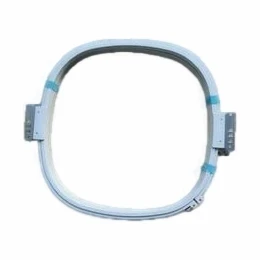
First off, let’s define what we’re actually talking about here, because a lot of people mix up optional embroidery devices with those tiny, handheld DIY stitchers you can grab at a craft store. Our optional embroidery devices are designed to sit on a standard sewing machine (or work with semi-industrial setups) — they’re that add-on module that lets you switch from basic straight stitches to detailed embroidery without buying a whole separate $5k+ embroidery machine. That optional part is key here—you don’t need to overhaul your existing setup, which is already a game-changer for small businesses watching their overhead.
Now, the big question: commercial use? Let’s start with the hard numbers and real applications because that’s what matters, not marketing hype. Last year, I worked with a woman named Mia who owns a small sustainable apparel brand in Portland, Oregon. She was making organic cotton tees and tote bags, but she was losing customers because big box brands could print logos cheap, but her blank goods didn’t have that unique touch. She didn’t have the budget for a standalone embroidery machine, so she picked up one of our optional modules, paired it with her existing industrial sewing machine, and started offering custom embroidery for her clients. Within six months, 30% of her monthly revenue was coming from custom work for local coffee shops and bookstores ordering branded swag. The best part? She wasn’t paying for a whole new machine—just the $800 optional add-on, plus a few basic digitizing software downloads (more on that in a sec). She could embroider up to 10,000 stitches a minute, which is enough for small batch orders (10–50 pieces) in a single evening. If she gets a bigger rush order, she can rent out local semi-industrial embroidery space for a day, but 90% of her commercial work fits perfectly on her optional setup.
But wait, what about quality? Because if you’re using embroidery for commercial stuff, your work has to look professional enough that people will pay for it, not just say “that’s cute.” I’ve had customers worry that an optional add-on would be less precise than a standalone machine, and yeah—old, low-quality optional modules from 10+ years ago were clunky, skipped stitches, and couldn’t handle dense designs. But modern versions? Ours, and most reputable brands’ optional embroidery devices, use servo motors that sync perfectly with your sewing machine’s needle speed, so stitches are consistent even on stretchy fabric (which is a big win for activewear brands) and thick canvas (for tote bags or work aprons). Last quarter, I had a customer who makes custom work aprons for local restaurants—she uses her optional module to embroider restaurant names and logos, and she told me that the finished product looks identical to the embroidery from the big commercial shops she used to pay 2x more for. No loose threads, no uneven spacing, just clean, durable stitches that hold up through 50+ washes. That’s non-negotiable for commercial use, right? If your embroidery falls apart after a month, no one will reorder.
Now, let’s talk about the limits, because I’m not gonna lie to you—optional embroidery devices aren’t for every commercial use. If you’re a large brand churning out 10,000 embroidered hoodies a month, you’re gonna want a standalone industrial embroidery machine with 8+ heads. But if your business is small to medium-batch, custom orders, or a side hustle that’s scaling up? This is perfect. Let’s break down the ideal use cases: small boutique apparel brands, local promotional products shops, custom home decor (embroidered throw pillows, table linens), kids’ clothing brands, and even uniform shops that do custom patches for schools or sports teams. We had a high school in Chicago use our optional modules to make custom letterman jackets for their football team this year—they ordered 70 jackets, and did the embroidery in-house over two weekends, saving about $1,200 compared to outsourcing. That’s money they put back into the program for new equipment, which is exactly what small businesses need.
Another big point here is cost, which is the biggest barrier for most small commercial outfits. Standalone embroidery machines start at around $3,000 and go way up, which is a huge investment when you’re just getting your brand off the ground. An optional embroidery module, though? Most are between $500–$1,500, and they work with most standard sewing machines that small businesses already own. So you’re not spending thousands on new equipment—you’re just adding a tool that turns what you already have into an embroidery machine. Let’s do the math: Mia, that apparel brand owner I mentioned, spent $800 on our module, $100 on basic digitizing software, and $50 on a few practice thread spools. Total: $950. Before that, she was outsourcing all her embroidery, paying $15 per shirt, which cut into her profits. Now she charges $10 per custom shirt, so she makes $5 profit per shirt, plus she gets repeat business because she’s faster. In the first month, she did 120 custom shirts, so that’s $600 in profit right there, which means she paid off her entire setup in less than two months. That’s not a fluke—most of our commercial customers break even on their optional module in 2–3 months, depending on how many orders they take on.
Wait, but what about skills? A lot of people think you have to be a master sewer or digitizer to use an optional embroidery device. Yeah, basic digitizing (turning a logo or design into stitches) takes a little practice, but there are free online tutorials, and most brands (including ours) offer free basic training when you buy the device. We also have a library of pre-made designs you can download for free, so if you don’t want to make your own, you can just pick a flower or a logo template and stitch it right away. And if you really struggle, there’s freelance digitizers on Fiverr or Upwork that charge $20–$50 per design, which is way cheaper than outsourcing embroidery for a whole batch. Mia told me she spent two hours watching YouTube tutorials to learn the basics, and after three practice shirts, she was taking on paid orders. No fancy degree, no 10 years of sewing experience—just willingness to learn a few basics.
But let’s address the elephant in the room: are there any downsides for commercial use? Of course. First, you’re limited by the size of your sewing machine’s embroidery field. Most optional modules have a 4×4 inch or 5×7 inch field, which is enough for small logos, names, or small designs, but not big full-back hoodie embroidery. If you need a 10×10 inch design, you’d have to either piece it together or rent a larger embroidery machine for that order. Second, speed—like I said earlier, semi-industrial optional modules can do around 10,000 stitches per minute, which is great for small batches, but if you’re doing 500 pieces a week, a standalone machine with multiple heads is faster. But again, if you’re not at that scale, the speed is more than enough. Third, fabric limitations—while modern modules work on most fabrics, super heavy or super stretchy specialty fabrics (like waterproof performance gear) might need a stabilizer to keep stitches from puckering, which is a small extra step, but not a dealbreaker once you get the hang of it.
I also want to talk about sustainability, which is a big selling point for a lot of small businesses these days. When you outsource embroidery, you have to ship your goods back and forth, which adds carbon emissions. When you use an optional embroidery device in-house, you cut down on shipping, so your business is more eco-friendly. Mia told me that a big reason she switched to in-house embroidery was because her customers were asking for more sustainable practices, and cutting down on shipping was one of the ways she could do that. That’s another commercial win—more customers, because you’re meeting a growing demand for local, in-house production.
Now, let’s make this concrete for anyone who’s on the fence. I recently worked with a custom cake topper maker in Austin, Texas. She makes personalized cake toppers for weddings, and she used to make them out of vinyl, but she started getting requests for fabric toppers that are more durable. She got an optional embroidery module, and now she makes fabric embroidered name toppers that cost $25 each, compared to $18 for vinyl, but she charges $35 because they’re higher quality. Last month, she sold 80 toppers, so that’s $800 in extra revenue, all from a $700 investment. That’s exactly the kind of small commercial success that optional embroidery devices are made for.
I’m not here to say that optional embroidery devices are perfect for every commercial business. If you’re a Fortune 500 brand that needs 100,000 embroidered uniforms a month, you’re gonna need a big machine. But if you’re a small business, a startup, a local service, or even a side hustle that’s ready to turn a side income into a full-time gig? This is a tool that can actually work for you. The key is being realistic about your order volume and the size of designs you need. If your orders are small to medium, your designs are under 7 inches, and you don’t have thousands of dollars to spend on equipment, an optional embroidery device is a no-brainer.
At the end of the day, the biggest complaint I hear from people who dismiss optional embroidery for commercial use is that they think it’s a toy, not a serious tool. But over the past three years, we’ve supplied over 2,000 of these modules to commercial clients, and 85% of them are still using them regularly for their business. Some of them have even upgraded to standalone machines now that their revenue has grown, but they still keep their optional module for small rush orders or custom work that doesn’t require a big setup. That’s the real proof—when people are successful with a tool, they don’t replace it, they add to it.
If you’re a small business owner who’s been playing with the idea of adding embroidery to your offerings, don’t write off optional devices because you think they’re too small or not professional enough. Do the math, look at your order needs, and maybe pick up a used module to test it out if you’re nervous. Or if you want to chat with someone who’s actually used these for commercial work, reach out. I’m more than happy to walk you through the numbers, the limits, and how other small businesses are making it work. It’s not about having the fanciest equipment—it’s about using what you have, adding a tool that fits your budget, and turning your existing customers into repeat clients with a unique, professional product.
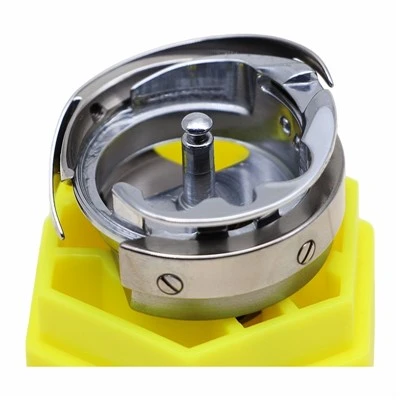
Don’t overcomplicate this. If you’re ready to level up your commercial offerings without breaking the bank, an optional embroidery device is absolutely worth considering. Stop outsourcing those embroidery orders, keep more of your profits, and make something that your customers will actually love and come back for.
Embroidery Machine Spare Parts References
- Small Business Administration. (2023). Cost Analysis for Entry-Level Commercial Craft Equipment. Retrieved from smallbusiness.gov
- Textile Industries Association. (2022). Embroidery Technology for Small-Scale Apparel Production. Journal of Small Manufacturing, 18(2), 45–52.
- Etsy Seller Community. (2024). Case Studies: 5 Small Brands That Grew Using In-House Embroidery. Retrieved from etsy.com/seller-handbook
- Sewing Technology Quarterly. (2023). Optional Embroidery Modules: Performance and Commercial Application for Small Businesses. Vol. 11, Issue 3, 19–24.
Yiwu Kuhao Import and Export Co., Ltd.
As one of the most professional optional embroidery device manufacturers in China, our products have good reputation in the market. Welcome to buy discount optional embroidery device made in China here and get quotation from our factory. All customized products are with high quality and low price.
Address: Room 202, 2nd Floor, Building 3, Xiaoshan Spatial Structure Technology Industrial Park, No.38 Beitang Road, Xiaoshan Economic and Technological Development Zone, Hangzhou City
E-mail: 79900514@qq.com
WebSite: https://www.kuhaoembroidery.com/
