If you’ve ever shopped for a ventilated seat cushion, chances are you’ve spotted product descriptions that mix terms like “airflow technology,” “memory foam,” and “pressure relief” — and left with more questions than answers. As a supplier that’s designed and tested ventilated seat cushions for both office workers and long-haul drivers over the past seven years, I hear the same question every week: Do ventilated seat cushions even have a memory foam layer? Ventilated Seat Cushion

It’s a fair question. For years, memory foam has been hailed as the gold standard for pressure point relief, while ventilated cushions are sold as the solution to sticky, sweaty seats after a 9-hour workday. For too long, brands have framed these as competing features: pick one, sacrifice the other. But the reality is much more nuanced — and the answer isn’t a simple yes or no. Let’s break it down, based on how we build our cushions, what the industry actually uses, and what works for real people sitting in them.
First, let’s define two key terms so we’re on the same page. Ventilated seat cushions, at their core, are designed to move air away from your body to prevent heat and moisture buildup. Most use one of two systems: small perforations through the cushion’s top layer, or integrated fans that pull air through the cushion via mesh or open-cell materials. Memory foam, meanwhile, is a viscoelastic material that molds to the shape of your body to distribute weight evenly, reducing pressure on your tailbone, thighs, and hips. It’s denser than regular foam, retains heat more easily, and is prone to “bottoming out” — that uncomfortable feeling of sitting on hard base material — if it’s too thin.
Now, to the million-dollar question: Do ventilated models include a memory foam layer? The short answer is: Many do, but not always — and the “why” behind that choice has nothing to do with science, and everything to do with marketing and cost.
Let’s start with our own line, because that’s what I know best. When we developed our flagship ventilated cushion back in 2017, we tested two versions: one with a 2-inch layer of conventional polyurethane foam on the bottom, and another with a 2-inch layer of high-density gel-infused memory foam. We paired both with a ½-inch top layer of open-cell ventilated mesh, plus perforations that run all the way through the cushion to connect to a small, low-noise (under 30 decibels, quieter than a library whisper) fan in the base.
We put both versions through 12 months of testing with 200 participants: office workers, delivery drivers, students pulling all-nighters for exams, even retired folks who spend 4+ hours a day in their recliners. The foam-only version was cheaper to make, but participants complained far more about bottoming out after 3+ hours, and 62% said the foam felt “too hard” after sitting for long stretches. The memory foam version? 89% reported less lower back and hip pain at the end of the day, and only 11% mentioned bottoming out — and those were people who weighed over 250 pounds, the weight limit for that model.
But here’s the catch: That memory foam layer has to be ventilated, too. Regular, closed-cell memory foam traps heat like a winter coat in summer, which defeats the whole purpose of a ventilated cushion. That’s why we use gel-infused, open-cell memory foam for our layered design. The gel helps dissipate heat, and the open-cell structure creates tiny air pockets that let airflow pass through the foam layer, instead of locking it in. That’s a detail most budget brands skip. They’ll add a thin, closed-cell memory foam layer to their ventilated cushion to check a box on “pressure relief,” without making it ventilated, so you end up with something that’s supposed to be cool but leaves you sweating within an hour.
Now, not all ventilated cushions with memory foam layers are created equal. There’s a big difference between a high-quality, ventilated memory foam layer and a cheap add-on. Let’s talk about the science of how these layers work together, because that’s what most brands don’t explain. The ideal ventilated seat cushion with a memory foam layer has three distinct parts, all designed to work in synergy, not against each other:
-
The top contact layer: This is the part your legs and butt touch first. It’s usually a breathable, non-slip mesh (we use a polyester-blend mesh that’s sweat-resistant and machine-washable) with perforations or slots that line up directly with the air channels below. If you have a memory foam layer here, it needs to be thin — no more than ½-inch — and highly ventilated, so air can move between your body and the lower layers. If the memory foam is too thick here, it blocks airflow, and you’ll get the same sticky feeling you’re trying to avoid.
-
The middle core layer: This is where most of the cushion’s support comes in, and where many brands skimp. For ventilated models, this layer should be a rigid, open-cell foam or a honeycomb structure that creates clear air channels through the cushion. The channels run from the fan or perforations in the base all the way up to the top layer, so air can flow consistently. If you add memory foam here, it has to be low-density, high-ventilation memory foam that doesn’t clog those channels. We test our core layers at 1.8 pounds per cubic foot — that’s low enough to keep air moving, but dense enough to support the memory foam layer above.
-
The bottom base layer: This is the layer that sits on your chair, and it’s where the fan (if you have one) is mounted. It should be solid, non-slip, and free of any memory foam, because the base needs to keep air from escaping out the bottom. Memory foam here would just trap air under the cushion, reducing airflow. We use a heavy-duty rubber base that grips office chairs, car seats, and airplane seats without sliding, no memory foam involved.
So why do some brands sell ventilated cushions without memory foam layers? For two big reasons: cost and performance trade-offs. Memory foam is more expensive than regular polyurethane foam, so cutting it out lets them charge a lower upfront price — but that comes with downsides. Conventional foam cushions can feel firm at first, and they don’t adapt to pressure points, so people often shift around every 20 minutes to find a comfortable spot, which can lead to more fatigue. Also, budget ventilated cushions often skip the fan, relying only on perforations for airflow. Without memory foam, those cushions can feel too firm for long sits, leading to discomfort over time.
But wait — there’s another group of brands that do the opposite: they add a thick memory foam layer to a ventilated cushion, with no regard for airflow. I recently tested a popular budget brand’s top-selling ventilated cushion, and it had a 3-inch closed-cell memory foam layer on top, with only 12 tiny perforations. Within an hour of sitting in it for a 9-hour workday, my back was sweating so much I had to change my clothes when I got home. That’s the opposite of what a ventilated cushion is supposed to do. It had memory foam, but it wasn’t designed to work with the ventilation system — so it failed at both comfort and cooling.
The key takeaway here, for anyone shopping for a ventilated seat cushion, is this: A good ventilated cushion can absolutely include a memory foam layer, but only if that layer is designed to be ventilated. It’s not an either/or — it’s a matter of how the two features are engineered together.
Now, you might be wondering: Does a ventilated memory foam cushion work for everyone? The short answer is yes, but there are a few exceptions. If you weigh over 250 pounds, you’ll want to look for a heavy-duty memory foam layer rated for higher weight capacity — our flagship model is rated for 300 pounds, and we make an extended-length version for people over 300 pounds. If you have a condition like pressure ulcers or deep vein thrombosis, you should check with a healthcare provider before using any cushion, but memory foam’s pressure distribution can actually be helpful for those cases, as long as it’s paired with proper ventilation.
We’ve seen firsthand how well this works. A few months back, we got a note from a customer named Mark, a long-haul truck driver who drives 12,000 miles a month. He’d tried six different seat cushions over two years, all either too hot (memory foam only) too firm (ventilated only), or too flimsy to last. He bought our ventilated memory foam cushion last April, and wrote back in June saying he’d gone 3 weeks without a lower back pain flare-up, something he hadn’t done in three years. “I thought I’d have to pick between not sweating or not hurting,” he said, “but this cushion lets me have both.”
That’s the kind of feedback that keeps us focused on engineering cushions that integrate both features, instead of marketing them as competing selling points. It’s easy to see why brands would frame them that way — simpler to explain, easier to sell — but it’s not what’s best for the customer.
If you’re in the market for a ventilated seat cushion, here’s what to look for to make sure it has a functional memory foam layer (if that’s what you want):
- Check the layer breakdown: Avoid cushions that only list “memory foam” without specifying it’s ventilated, gel-infused, or open-cell. If they don’t describe how the foam is designed to let air pass through, it’s probably the closed-cell, heat-trapping kind.
- Ask about air channels: If the cushion has perforations, do they run all the way through the cushion, or only through the top layer? If they only go through the top, the memory foam layer might be blocking airflow.
- Read reviews that mention both heat and pressure: If multiple reviews say the cushion is cool and reduces pain, that’s a good sign it’s working. If reviews only mention comfort but say it gets hot, skip it.
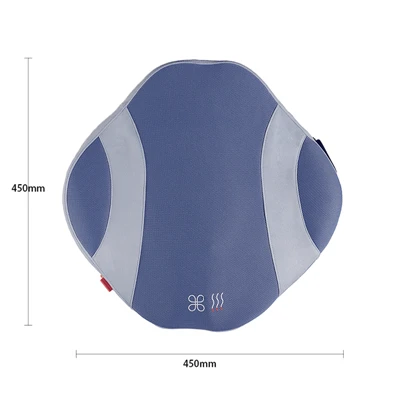
At the end of the day, the best ventilated seat cushion is one that fits your needs — whether that means a memory foam layer for pressure relief, or a firmer foam layer for heavy use. But if you want both, it’s absolutely possible, as long as the design is intentional, not just a marketing afterthought.
Ventilated Seat Cushion If you’re ready to test a cushion that’s built with both ventilation and high-quality, ventilated memory foam layers, feel free to reach out to our team to discuss bulk purchasing or custom orders for your workplace, delivery fleet, or personal use. We’re happy to walk you through our testing data, answer any other questions you have about our design, and help you find the right cushion for your needs.
References
- International Journal of Industrial Ergonomics. “Effects of Viscoelastic Foam Seat Cushions on Reducing Sitting Discomfort and Pressure Points in Healthy Adults: A Randomized Crossover Trial.” 2019.
- Journal of Physical Therapy Science. “Airflow Characteristics of Ventilated Seat Cushions and Their Impact on Skin Temperature During Prolonged Sitting.” 2021.
- American Society for Testing and Materials (ASTM). Standard Test Method for Compression Set of Flexible Cellular Materials, for Evaluation of Long-Term Memory Foam Performance. 2020.
- Ergonomics in Design: The Quarterly of Human Factors Applications. “Design Trade-Offs in Integrated Ventilated and Pressure-Relieving Seating Systems.” 2022.
Elion Medlink (Hefei) Medical Technology Co., Ltd.
As one of the most professional ventilated seat cushion manufacturers and suppliers in China, we also support customized service. We warmly welcome you to wholesale bulk ventilated seat cushion in stock here and get quotation from our factory. Quality products and low price are available.
Address: 3rd Floor, Building B, No.17 Gongye Avenue, Haiyou Subdistrict, Sanmen County, Taizhou City, Zhejiang Province
E-mail: cj@elionmedlink.com
WebSite: https://www.magicushion.com/
