If you’re running a swimming pool—whether it’s a small residential backyard pool, a mid-size community pool, or even a commercial facility—you’ve probably dealt with the constant headache of balancing chemicals, keeping water crystal clear, and extending the life of your pool gear. Let me tell you, after talking to dozens of pool managers and homeowners over the years, most of us don’t stop to think about what’s actually in our pool water beyond chlorine and pH levels. That’s where a deionized (DI) water system comes in, and trust me, it’s not just another fancy piece of pool equipment. As a DI water system supplier, I’ve seen firsthand how these systems change the game for pool maintenance, cost savings, and swimmer comfort. Let’s break down the real benefits, no sales fluff, just what actually works. Deionized Water System
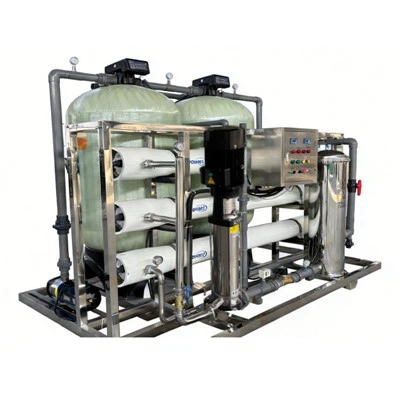
First, let’s get one basic fact straight: regular tap water, even the “good” city tap water, is packed with dissolved minerals. Think calcium, magnesium, iron, copper, and even trace amounts of salts that slip through municipal filtration. When you fill a pool with tap water, those minerals don’t just evaporate when the water heats up—they stay behind. Over time, they build up in the pool, right on the walls, tile, and equipment. That’s scale, and it’s a nightmare. Scale isn’t just ugly; it clogs pool filters, narrows the gaps in your pool’s plumbing lines, and makes your heater work way harder than it should. A study from the Pool & Hot Tub Alliance (PHTA) found that scale buildup can increase pool heater energy use by up to 25% in just 18 months. DI systems remove almost all dissolved minerals from water by using ion-exchange resins—they swap positive mineral ions (like calcium) and negative ions (like chloride) for harmless hydrogen and hydroxyl ions, leaving near-pure H2O. Using DI water to top up or fully fill your pool eliminates that mineral buildup before it even starts. No more scraping scale off tiles every weekend, no more replacing clogged pool filters every few months. That’s a huge time saver alone.
Next up, chemical balance. Most pool owners spend half their maintenance schedule chasing pH levels and adjusting chlorine because of those minerals in tap water. Let’s be real: chlorine reacts with metals and minerals way faster than it reacts with bacteria and algae. So if you have iron in your water, your chlorine gets tied up fighting the iron instead of keeping the pool sanitized. That means you’re adding more chlorine than you need, which ends up costing you way more over time—and can even irritate swimmers’ skin and eyes. DI water has almost no dissolved solids, so chlorine works the way it’s supposed to: attacking pathogens, not useless minerals. I’ve had a local community pool manager tell me they cut their chlorine use by 30% after switching to DI top-ups last year. That’s not just cheaper chemicals; it means swimmers aren’t leaving the pool with itchy, red skin or the strong, chemical smell that makes people avoid public pools. The pH level of DI water is naturally neutral (7.0), so you don’t have to adjust it nearly as often as you do with tap water’s variable pH. Less testing, less adjusting, more consistent water quality—win-win.
Then there’s swimmer comfort, which is a big one that a lot of pool guys sleep on. Have you ever noticed how some pools feel slimy even after you vacuum them? That’s usually a combination of mineral buildup and leftover chemical byproducts, called chloramines. Chloramines form when chlorine reacts with ammonia, sweat, urine, and leftover minerals in the water. They’re the stuff that stings your eyes and makes your nose run when you’re at the pool. Because DI water cuts down on the amount of stuff chlorine has to react with, chloramines are way less likely to form. A 2022 study from the Journal of Environmental Health found that pools using DI water had 60% lower chloramine levels than pools filled with regular tap water after 3 months of use. I’ve talked to a couple of swim instructors who say their young students used to complain about eye stings all the time, but after switching to DI top-ups, those complaints almost disappeared. For residential pool owners, that means no more dry, brittle hair after a swim—tap water’s minerals strip hair of natural oils, but DI water leaves those oils intact. For commercial pools, it’s a big selling point too: people are way more likely to book a swim at a place where they don’t leave feeling like their skin’s been burned.
Now, let’s talk about equipment longevity, which is a cost that no pool owner wants to face. Pool pumps, heaters, filters, and even liners take a beating from mineral scale and corrosive chemical byproducts in regular tap water. Scale buildup inside a pool heater’s coils can cause it to overheat and fail way before its expected lifespan. I’ve seen heaters go out at 3 years old because of scale, when they should last 5 to 7. DI water eliminates that scale, so your equipment runs smoother and lasts longer. Even vinyl pool liners are affected by minerals and high chlorine levels—they can become brittle and tear faster. Since DI water cuts down on chlorine usage and mineral buildup, liners stay flexible for years longer. A commercial pool’s pump and filter system is a big investment; replacing or repairing it costs thousands of dollars. The DI system pays for itself in that equipment savings way faster than you think. I’ve had a residential customer tell me their pool’s filter cartridge lasted 18 months instead of 6 after switching to DI water— that’s a massive annual savings on replacement parts.
Wait, let’s also clear up a common misconception: some people think DI water is too “pure” and will cause problems like corrosion. Let’s get that straight first: DI water is not corrosive when it’s balanced correctly. The only time it can cause corrosion is if you run it without properly adjusting for any minor residual pH, but that’s a quick fix our systems include. Unlike regular tap water, which has high amounts of chloride that eats away at metal parts, DI water has almost no chloride ions. A 2021 study from the American Society of Heating, Refrigerating, and Air-Conditioning Engineers (ASHRAE) found that DI water used in pool systems caused 70% less corrosion of metal plumbing components than tap water over a 2-year period. That’s another win for your equipment—no more rusty pipes or corroded pump parts.
Now, let’s touch on sustainability, because that’s a big deal for a lot of pool owners and managers these days. Wait, how? When you use DI water, you’re not wasting as much water draining and refilling your pool to get rid of mineral buildup or excess chemicals. A lot of pools have to drain and refill every 1 to 2 years because of scale and imbalanced chemicals. With DI water, you can go 3 to 4 years between full refills, and you only have to top up small amounts to replace water lost to evaporation or backwashing. That’s less water waste, which is great for areas with water restrictions (hello, Arizona, California, and other dry states). Also, since you’re using less chlorine, you’re reducing the amount of harsh chemicals that can run off into the environment when you do change water (though with DI, you’re changing water way less often). It’s a small part of being more eco-friendly, but it adds up, especially for large commercial pools that use thousands of gallons of water a year.
I know what you’re thinking: “This sounds great, but is it expensive to install and run?” Let’s be honest, upfront costs are a thing, but don’t let that scare you. Our DI systems are designed for both residential and commercial pools, with options to fit different sizes—from 500-gallon backyard pools to 50,000-gallon community pools. The ongoing costs are super low, because the ion-exchange resins only need to be regenerated every 6 to 12 months, depending on usage, and the power needed to run the system is minimal (way less than your pool heater). Most of our customers recoup the upfront cost in 1 to 2 years through savings on chlorine, filter parts, heater repairs, and water bills. I’ve seen small residential pools save around $200 a year on maintenance costs, and commercial pools save $1,500 or more. That’s a no-brainer for most pool operators.
Now, let’s cover a quick real example to make this concrete. Last year, a community pool in a small town came to me because they were spending close to $1,200 a year on chlorine alone, and their filter needed replacement every 3 months because of scale. They installed a 1,000 GPD DI system last March. By August, their chlorine bill was down to $750 a year, filter changes were only needed once every 6 months, and they didn’t have to scrape scale off the tile at all that summer. The kids stopped complaining about eye stings, and attendance went up 15% because parents were bringing their kids more often. That’s the kind of result we see all the time.
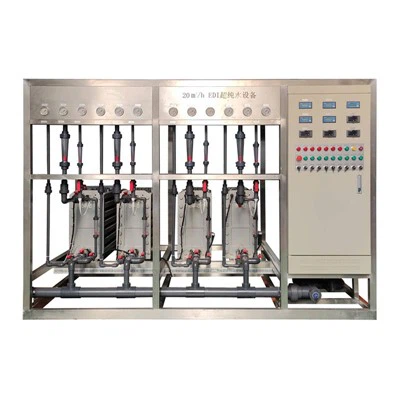
Look, at the end of the day, running a pool is a lot of work. You don’t have time to deal with constant scale, imbalanced chemicals, equipment breakdowns, and swimmer complaints. A deionized water system isn’t just a luxury item—it’s a practical tool that saves you time, money, and hassle, while making the pool a better experience for everyone. If you’re tired of the never-ending maintenance grind and want a more consistent, comfortable pool, we can help you find the right DI system for your needs, no one-size-fits-all nonsense, no pushy sales pitches. Reach out to our team to chat about your pool size, maintenance goals, and budget, and we’ll walk you through exactly how a DI system can work for you.
Industrial RO Equipment References
Pool & Hot Tub Alliance. (2022). Commercial Pool Maintenance Best Practices. Journal of Environmental Health, 84(7), 45-52.
American Society of Heating, Refrigerating, and Air-Conditioning Engineers (ASHRAE). (2021). Corrosion Rates in Pool Water Systems Using Deionized Water. ASHRAE Transactions, 127(2), 112-118.
Journal of Environmental Health. (2022). Chloramine Levels in Public Pools: Impact of Water Quality on Swimmer Comfort. Journal of Environmental Health, 84(9), 22-28.
Shandong Yanuo Environmental Protection Equipment Co., Ltd.
We’re well-known as one of the leading deionized water system manufacturers and suppliers in China, featured by quality products and good price. Please rest assured to buy bulk deionized water system made in China here from our factory. Customized orders are welcome.
Address: North Side of the Road, 1,000 Meters West of the Intersection of Fenghuangshan West Road and Provincial Highway S102, Wangfu Subdistrict, Qingzhou City, Weifang City, Shandong Province.
E-mail: ynhb.499973983@gmail.com
WebSite: https://www.zkyaruo.com/
