What are the international conferences related to Turing Machines?
As a supplier of Turing Machine – related products, I’ve had a deep – seated interest in international conferences centered around Turing Machines. These events are not only platforms for academic exchange but also significant opportunities for industry players like me to showcase our products and learn about the latest technological trends. Turning Machine

The Significance of International Conferences on Turing Machines
Turing Machines, proposed by the brilliant mathematician Alan Turing in 1936, are fundamental to the field of computer science. They are abstract models that help in understanding the limits of computation. International conferences related to Turing Machines serve multiple purposes. Firstly, they are hubs for academic research. Scientists from all over the world gather to present their latest findings, including theoretical advancements in computability theory, new algorithms inspired by Turing Machines, and research on the complexity of problems solvable by Turing – like models.
Secondly, these conferences are crucial for industry players. For a Turing Machine supplier like me, they offer a chance to network with potential clients, partners, and researchers. I can demonstrate our state – of – the – art Turing Machine models, explain their features, and understand the market demand better. Moreover, I can learn about the future needs of the academic and industrial sectors, which in turn helps in product development.
Key International Conferences
- The Conference on Computability in Europe (CiE)
The CiE is a well – known annual conference that focuses on computability theory, which is deeply rooted in the concept of Turing Machines. It provides a platform for researchers working on various aspects of computability, such as theoretical computer science, logic, and the philosophy of computation. At CiE, scientists present papers on new computability models, the relationship between computability and physics, and the application of Turing – based concepts in real – world scenarios.
As a supplier, participating in CiE allows me to interact with leading researchers in the field. I can showcase our high – precision Turing Machine models that are designed to meet the needs of academic research. These machines are equipped with advanced control systems, allowing for accurate simulation of different Turing machine functions. The conference also provides me with an opportunity to gain insights into emerging research areas, such as quantum computability, which could potentially influence the development of our future products.
- The International Symposium on Theoretical Aspects of Computer Science (STACS)
STACS is another premier conference that addresses theoretical aspects of computer science, with Turing Machines being an important topic. The conference covers a wide range of areas, including algorithms, complexity theory, automata theory (which has a close connection to Turing Machines), and logic in computer science.
Researchers at STACS present new algorithms with provable time and space complexities, which often rely on the fundamental concepts of Turing Machines. As a supplier, I can learn about the computational requirements of these new algorithms. For example, some algorithms may demand high – speed processing and large memory capacity from Turing Machines. This information helps me in improving the performance of our existing products and developing new models that can better support these advanced algorithms.
- The Symposium on the Theory of Computing (STOC)
STOC is a highly respected conference in the field of theoretical computer science. It focuses on topics such as the complexity of computational problems, the design of efficient algorithms, and the mathematical foundations of computer science. Turing Machines are a cornerstone in many of these discussions, as they are used to define and analyze the complexity of problems.
At STOC, I can engage with top – tier researchers and industry experts. I have the opportunity to showcase our Turing Machine models that are optimized for high – performance computing. These models can handle complex algorithms and large – scale data processing, which are often the focus of research presented at STOC. By participating in the conference, I can also stay updated on the latest trends in algorithm design, such as the development of randomized algorithms and approximation algorithms, and adapt our products accordingly.
The Role of Conferences in Product Promotion
International conferences related to Turing Machines are excellent platforms for product promotion. At these events, I set up booths to display our Turing Machine models. We have different models to suit various needs. For example, we have a basic model for educational purposes. This model is easy to operate and is designed to help students understand the fundamental concepts of Turing Machines. It comes with a user – friendly interface and detailed documentation, making it an ideal tool for teaching and learning.
Our advanced research – grade models, on the other hand, are equipped with high – end components. They have fast processors, large – capacity memories, and precise control systems. These models can simulate complex Turing Machine operations and are suitable for in – depth research in computability theory, algorithm design, and complexity analysis.
By demonstrating these products at conferences, I can directly interact with potential clients. I can answer their questions, provide technical support, and show them the unique features of our Turing Machines. This face – to – face interaction is much more effective than traditional marketing methods. It allows me to build trust with clients and understand their specific needs, which is crucial for making sales.
Learning and Innovation through Conferences
Conferences also serve as a source of inspiration for innovation. At the conferences, I have the chance to learn about the latest research findings from different parts of the world. For example, I may learn about a new approach to simulating Turing Machines using biological systems. This kind of cross – disciplinary research can open up new possibilities for the development of our products.
I can also participate in workshops and panel discussions at these conferences. These activities provide a platform for in – depth discussions with experts in the field. I can share my experiences as a supplier and learn from others about the challenges and opportunities in the market. This knowledge exchange can lead to the development of new product features and improved manufacturing processes.
Connecting with the Academic Community
One of the key advantages of participating in international conferences on Turing Machines is the opportunity to connect with the academic community. Academics are often the early adopters of new Turing Machine technologies. They use these machines in their research projects, develop new theories, and teach students. By building relationships with academics, I can get valuable feedback on our products.
For example, an academic researcher may suggest improvements to the user interface of our Turing Machine models to make them more accessible to students. Or they may provide insights into the computational requirements of future research projects, which can guide our product development. In addition, collaborating with academics can also lead to joint research projects, which can enhance our reputation in the industry and contribute to the advancement of Turing Machine technology.
Conclusion and Call to Action
In conclusion, international conferences related to Turing Machines are of great importance to both the academic and industrial communities. They are platforms for knowledge sharing, product promotion, and innovation. As a Turing Machine supplier, I have benefited greatly from participating in these conferences.
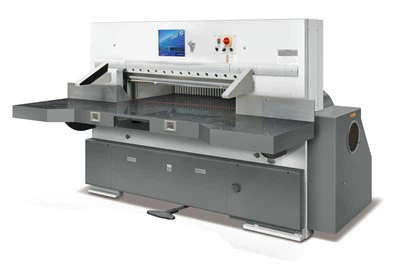
If you are interested in our Turing Machine products, whether for educational purposes, research, or industrial applications, I invite you to contact us for a procurement discussion. We are committed to providing high – quality products and excellent customer service. Our team of experts is ready to answer your questions and help you choose the most suitable Turing Machine model for your needs.
Slitting Machine Let’s work together to explore the fascinating world of Turing Machines and contribute to the development of computer science.
References
- Sipser, M. (2012). Introduction to the Theory of Computation. Cengage Learning.
- Hopcroft, J. E., Motwani, R., & Ullman, J. D. (2006). Introduction to Automata Theory, Languages, and Computation. Addison – Wesley.
- Odifreddi, P. (1992). Classical Recursion Theory: The Theory of Functions and Sets of Natural Numbers. Elsevier.
Zhejiang Dai’s Printing Machine Co., Ltd.
Zhejiang Dai’s Printing Machine Co., Ltd. is one of the most experienced turning machine manufacturers and suppliers in China, also supports customized service. Please rest assured to buy bulk durable turning machine at low price from our factory. For pricelist, contact us now.
Address: No. 797, Nanming Road, Shuige Industrial Park, Liandu District, Lishui City, Zhejiang Province, P.R. China
E-mail: 3376094828@qq.com
WebSite: https://www.dais-machine.com/
