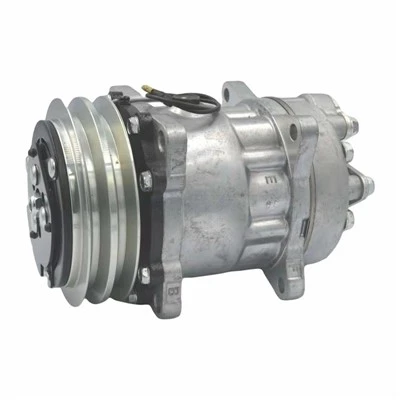
As a supplier of agricultural AC compressors, ensuring the optimal performance of these essential components is not only crucial for our customers but also a matter of pride for our business. Agricultural AC compressors are the heart of any agricultural air – conditioning system, responsible for cooling tractors, harvesters, and other farm equipment cabins. In this blog, I’ll share some practical methods on how to check the performance of an agricultural AC compressor. Agricultural AC Compressor
Visual Inspection
The first step in assessing an agricultural AC compressor’s performance is a thorough visual inspection. Start by examining the exterior of the compressor. Look for any signs of physical damage such as dents, cracks, or corrosion. Dents can affect the structural integrity of the compressor, which may lead to internal component misalignment and reduced efficiency. Cracks can allow refrigerant to leak, compromising the cooling capacity of the system.
Check the compressor’s mounting bolts. Loose bolts can cause excessive vibration during operation, which not only damages the compressor itself but also other components in the air – conditioning system. Vibration can loosen electrical connections, leading to intermittent operation or complete failure.
Inspect the refrigerant lines connected to the compressor. These lines should be free of kinks, bends, or signs of leakage. A refrigerant leak can be identified by the presence of oily residue around the connections or on the lines. Leaking refrigerant not only reduces cooling performance but can also damage the compressor due to insufficient lubrication, as the refrigerant often carries the compressor lubricant.
Electrical System Check
The electrical system is a vital part of an agricultural AC compressor’s operation. Begin by checking the power supply to the compressor. Ensure that the compressor is receiving the correct voltage. Fluctuations in voltage can cause the compressor to run inefficiently or even damage its electrical components. You can use a multimeter to measure the voltage at the compressor terminals.
Inspect the electrical wiring for any signs of wear, fraying, or damage. Damaged wiring can cause short – circuits, which can be extremely dangerous and may lead to compressor failure. Check all electrical connections to make sure they are tight and free of corrosion. Loose connections can cause overheating and intermittent operation.
The compressor’s motor also needs to be inspected. Listen for any unusual noises when the compressor is running. A humming or grinding noise may indicate a problem with the motor bearings or other internal components. If the motor fails to start, it could be due to a faulty capacitor or a blown fuse. In such cases, replace the faulty component following the manufacturer’s specifications.
Compressor Pressure Check
Measuring the pressure of the refrigerant in the compressor is a key indicator of its performance. You’ll need a set of pressure gauges to perform this check. Connect the low – side and high – side gauges to the corresponding ports on the compressor.
The low – side pressure should be within the manufacturer’s recommended range when the compressor is running. A low low – side pressure may indicate a refrigerant leak, a clogged expansion valve, or a faulty compressor. A high low – side pressure could mean an overcharge of refrigerant, a blocked condenser, or a failing compressor.
The high – side pressure also provides valuable information. A high high – side pressure can be caused by a dirty condenser, restricted airflow through the condenser, or a malfunctioning compressor. A low high – side pressure may suggest a refrigerant undercharge or a problem with the compressor’s compression ability.
It’s important to note that pressure readings can vary depending on the ambient temperature. Always refer to the manufacturer’s guidelines for the correct pressure ranges at different temperatures.
Compressor Temperature Check
Monitoring the operating temperature of the agricultural AC compressor is essential for assessing its health. Use an infrared thermometer to measure the temperature of the compressor’s shell. An overheating compressor can indicate several issues, such as a refrigerant leak, insufficient lubrication, or a malfunctioning motor.
Excessive heat can cause the compressor’s internal components to expand, leading to premature wear and damage. It can also break down the lubricating oil, reducing its effectiveness and increasing friction within the compressor. If the compressor is running too hot, shut it down immediately and investigate the cause.
Compressor Oil Level Check
The compressor relies on lubricating oil to reduce friction between its moving parts and prevent wear. Check the oil level in the compressor according to the manufacturer’s instructions. Some compressors have a sight glass that allows you to visually inspect the oil level.
If the oil level is too low, it can cause excessive wear on the compressor’s bearings and other components. Add the appropriate type and amount of oil as recommended by the manufacturer. However, overfilling the compressor with oil can also cause problems. Too much oil can reduce the compressor’s efficiency and may even lead to oil carry – over into the refrigerant system, where it can clog the expansion valve and other components.
Performance Testing in Real – World Conditions
In addition to the above checks, it’s important to test the agricultural AC compressor in real – world conditions. Install the compressor in the agricultural equipment and run the air – conditioning system. Pay attention to the cooling performance in the cabin. The temperature should drop steadily and reach the desired level within a reasonable time.
Listen for any unusual noises coming from the compressor or the air – conditioning system during operation. Unusual noises can be a sign of a problem, such as a loose belt, a worn bearing, or a compressor malfunction.
Check for any signs of reduced airflow from the vents. Reduced airflow can be caused by a clogged air filter, a blocked duct, or a problem with the blower motor. Ensure that the air – conditioning system is circulating air effectively throughout the cabin.
Troubleshooting and Maintenance
If any issues are detected during the performance check, it’s important to troubleshoot and take appropriate action. For minor problems, such as a loose connection or a dirty air filter, you can perform simple maintenance tasks yourself. Tighten loose connections, replace the air filter, or clean the condenser to improve the compressor’s performance.
For more complex problems, such as a refrigerant leak or a faulty compressor motor, it’s recommended to seek the help of a professional technician. A qualified technician has the expertise and tools to diagnose and repair the problem correctly.
Regular maintenance is also crucial for ensuring the long – term performance of the agricultural AC compressor. Follow the manufacturer’s recommended maintenance schedule, which may include tasks such as refrigerant level checks, oil changes, and component inspections.
Conclusion

Checking the performance of an agricultural AC compressor is a comprehensive process that involves visual inspection, electrical system checks, pressure and temperature measurements, oil level checks, and real – world performance testing. By following these steps, you can identify potential problems early and take appropriate action to ensure the optimal performance of your agricultural air – conditioning system.
Construction Compressor As a supplier of agricultural AC compressors, we are committed to providing high – quality products and excellent after – sales service. Our compressors are designed to meet the demanding requirements of the agricultural industry. If you have any questions about our products or need assistance with compressor performance checks, we’d be more than happy to help. We invite you to contact us to discuss your specific needs and explore how our agricultural AC compressors can enhance the comfort and efficiency of your farm equipment.
References
- "Air Conditioning and Refrigeration Technologies Handbook", John Wiley & Sons
- Manufacturer’s manuals for various agricultural AC compressors.
Jiangsu Nuoyan New Energy Vehicle Air Conditioning Co., Ltd.
With abundant experience, we are one of the most professional agricultural ac compressor manufacturers and suppliers in China. We warmly welcome you to buy customized agricultural ac compressor at competitive price from our factory. Also, quotation is available.
Address: No. 7 Xingyuan Road, Huangqiao Economic Development Zone, Taixing City, Jiangsu
E-mail: nuyantech2026@163.com
WebSite: https://www.nuyantech.com/
